
Using A Video Wall Controller to Project on Multiple SurfacesUpdated 3 months ago
It is possible to project visuals on multiple screens. Many modern halls have screens hung on both the left and right side of the stage. Duplicating content to appear on multiple screens simultaneously is not difficult and in many halls that ability is 'baked in' to the venue wiring.
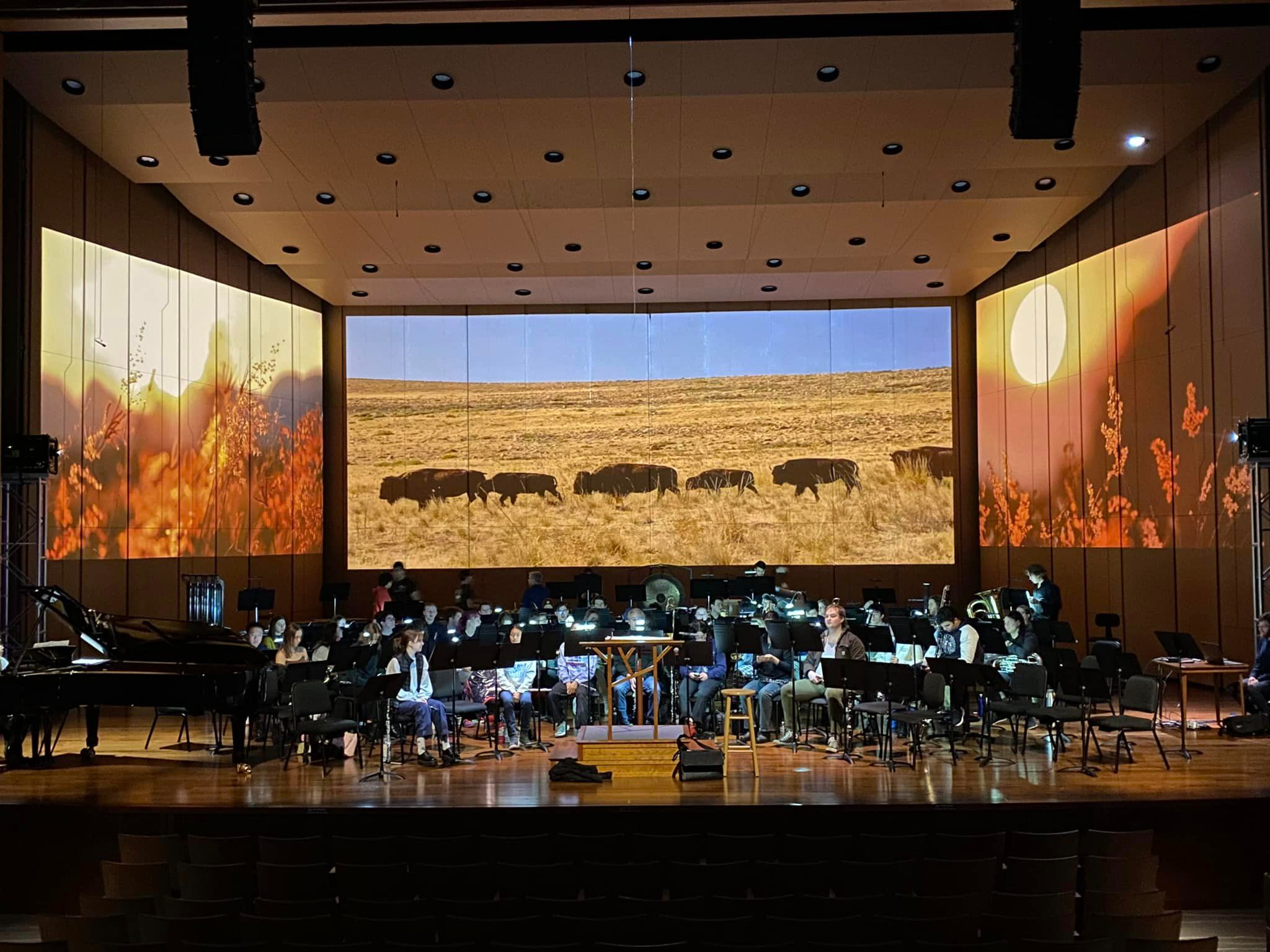
However, sometimes a live event producer may prefer to project unique content on multiple display surfaces. To accomplish this a video wall controller is required. A video wall controller has the ability to take a single video and split it into 2, 3, 4 or more separate video signals which can then be sent to multiple display surfaces. The dramatic effects and immersive qualities of a multi-panel projection are significant. These productions can be a bit complicated and stressful, but the payoff in terms of audience experience provides a healthy ROI (return on investment).
Video wall controllers are becoming more affordable and we predict this trend will continue into the future, along with a growing appetite to mount multi-panel projections by producers of all types and sizes. But for now, they are still largely an expensive and very complicated class of equipment. Matrox has taken a unique approach in its product line, creating an affordable and substantially easier video wall controller that can accurately be described as 'plug and play.'
Ion Concert Media offers the Matrox QuadHead2Go on a rental basis for customers wishing to produce a multi-surface video installation.